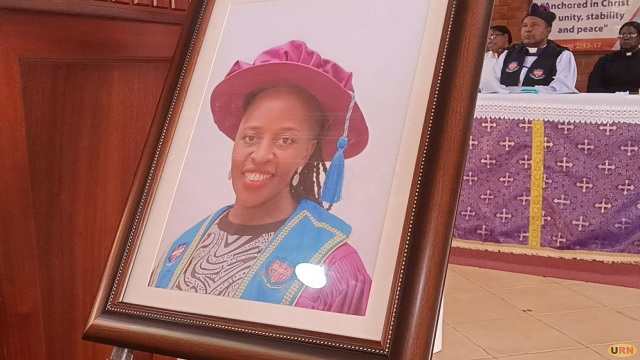
By Dr. Rebecca P. Tumwebaze
On 19 March, Hussein Dak Taewaiko, the man we knew as Sam when he worked as a shamba boy at Pamela’s home, will appear in court for the second time in connection with Pamela’s murder. It is alleged that around 2:00 a.m. on 11 February 2026, Taewaiko sneaked into Pamela’s bedroom and strangled her. He had managed to sneak into her house earlier that night.
Reports indicate that Taewaiko has confessed to the crime and that members of Pamela’s household identified him as the man who was present at the house on the night of the murder. However, despite this alleged confession, a clear motive for the killing has not yet been established.
Some sources have suggested that Taewaiko was a disgruntled former employee who returned to demand unpaid wages. Yet this claim has not been confirmed by any official police source. In fact, workers from Pamela’s household have disputed this narrative, saying they witnessed him receiving his wages and that there is evidence of mobile money
payments sent to his phone.
Over the past several weeks, I have spent time reviewing the events surrounding Pamela’s murder. I have spoken with people who knew her and cross-checked various accounts with my own knowledge of Pamela and how she ran her household. For context, Pamela was my big sister. We lived together at different times in our lives, and I knew her home well. I had visited that very house many times and even stayed overnight there, including during my most recent visit in November 2025, when Sam (now her alleged killer - Taewaiko) was still working for her.
During that visit, I spent the weekend with Pamela and her children and interacted with Sam. Particularly, I spent quite some time in the kitchen with Sam, where we worked side by side preparing dinner for guests Pamela hosted at the house during my stay. He came across as a quiet and calm young man to work alongside, and during my time there I observed no signs of tension or bad blood between him and his employer. When I later learned that he had been identified as her killer, I was deeply shocked.
While I believe the police may have arrested the person who physically carried out the murder, I remain unconvinced that the true motive behind Pamela’s murder has been established. Without a clear motive, it is possible that Taewaiko did not act alone and that there are others who may have been involved in planning or orchestrating the crime. If so, those individuals are still at large and should be brought to justice.
Over the past few weeks, I have noticed what seems to be a concerted effort to shape media narratives around Pamela’s death. In several instances, the information circulating in the media appears incomplete or even misleading. Many reports quote unnamed “sources,” with none directly citing the Police. Notably, Uganda Police have not publicly rejected any of these narratives.
There was an attempt by NTV to conduct an independent investigation, with related reports published on YouTube, but these were later removed without explanation. In light of this and the broader environment of incomplete or misleading narratives, I have decided to use my own social platforms and this blog to share my perspective. In this article, I highlight some of the unanswered questions and examine certain narratives that, in my view, may have been deliberately introduced to shape public opinion and divert attention from a thorough investigation and the pursuit of justice.
The Night of the Murder
Pamela arrived home with her sons at around 10:00 p.m. after an evening out. According to her live-in house help, Pamela and the boys went to bed at approximately 11:00 p.m. From my own knowledge of Pamela’s house, her bedroom was located directly opposite her sons’ bedroom, separated by a corridor. Her routine was consistent. She would first settle her boys into bed and then retire to her own room. Importantly, she kept both bedroom doors open at night so that her children could easily call out to her if they needed help. One of her sons suffers from asthma, and Pamela was always careful to ensure she could hear him in case he experienced breathing difficulties during the night and needed his inhaler. The corridor light between the two rooms was also always left on throughout the night.
According to the house help, Taewaiko was seen searching for house keys shortly after 2:00 a.m., allegedly intending to leave the house. I have read some accounts circulating in the media suggesting that Taewaiko entered Pamela’s bedroom and even spoke with her before killing her. Based on my knowledge of Pamela, and the simple reality that anyone would scream or raise alarm if they woke to find someone in their room, I find this version of events difficult to believe.
Pamela was naturally a late sleeper. After putting her children to bed, she often remained awake, praying or reading before sleeping off. When I visited her bedroom shortly after the funeral, I noticed a book on her bedside drawer, which is exactly what I would have expected. Reading before sleeping was part of her routine. Because of this habit, it is possible that Taewaiko waited until she had fallen deeply asleep before entering her room.
Accounts from people who were present in the house that night, as well as the first responders, including the driver who took her to hospital, suggest that there were no visible signs of struggle on Pamela’s body. In fact, according to those who saw her first, Pamela appeared almost as if she were still sleeping. The driver even suspected that she might have been drugged before being killed.
While this remains speculative, it raises an important question: Was Pamela incapacitated before she was killed?
My belief is that the killer intended to carry out the murder quietly, locate the house keys, and escape unnoticed, leaving Pamela to be discovered in the morning and the circumstances of her death shrouded in mystery. However, he was reportedly unable to find the keys because the new house help had changed the place where they were normally kept before going to sleep. This may have disrupted whatever plan he had.
The Narrative of Unpaid Wages.
Another troubling aspect of this case has been the claim that Pamela failed to pay Taewaiko his wages. Notably, this narrative began circulating even before news of his arrest became public. At one of the vigils held in Pamela’s memory, certain individuals connected to Uganda Police repeatedly advanced this claim. It remains unclear where the story originated, but considering how the investigation has unfolded, one cannot ignore the possibility that it may have been introduced to divert attention and distract from the deeper questions surrounding the case. It was therefore not surprising when the same narrative soon began appearing in various media reports.
For those of us who were present when the story surfaced at the vigils, its sudden spread raised concerns that it may have been deliberately introduced to shape public perception and potentially dampen public interest in pursuing the full truth behind the case.
Workers from Pamela’s household have strongly disputed this claim. According to them, Pamela paid her workers on a monthly basis, and Taewaiko had indeed received his wages. One worker (Daniel) specifically recalled that Taewaiko’s November salary had been paid via mobile money. Daniel remembered this clearly because Taewaiko had experienced problems with his mobile money PIN and had asked Daniel to accompany him to the MTN service centre in Mukono to resolve the issue. Daniel confirmed that they went together and successfully sorted out the problem so Taewaiko could withdraw his money. As soon as Daniel read this narrative, he went to Mukono police and provided a witness statement disputing the allegation.
Another version of the unpaid-wages story suggested that Pamela had withheld his salary because bicycles had gone missing at the house. However, household staff further confirmed that the bicycles were stolen after Taewaiko had already left employment.
On 31 December 2025, more than two weeks after Taewaiko had left the job, a bicycles disappeared from the property. Daniel noticed that there had been forced entry into the boys’ quarters, where Taewaiko had previously slept and where the bicycle had been stored. Inside that room, workers reportedly found Taewaiko’s identity card, raising suspicions that he may have returned to steal the bicycle. Co-workers also recall that he had always enjoyed riding the mountain bike while he worked at the house.
Taewaiko had left his employment in December to visit his family. Later, he reportedly called Pamela to inform her that he would not be returning after the holidays as planned. By all accounts, he left on good terms, with no apparent conflict or bad blood. This raises a crucial question: why would he later return to commit murder – unless he was acting on someone else’s behalf? Logically, it seems difficult to reconcile the idea that someone could leave employment peacefully, later realise there was a wage dispute, and then decide that the appropriate response was not to demand payment, but to return and kill.
Interestingly, in the investigative report by NTV that was later removed from YouTube, Pamela’s house help reportedly told the reporter that on the night of the murder, Taewaiko did not threaten or harm the maid or Pamela’s children, even when they dared to put up resistance as he attempted to leave the house after the killing. One would normally expect someone driven by rage to lash out at anyone standing in their way. Yet, throughout his actions that night, he appeared careful not to harm or threaten them. Apparently, even in the middle of committing murder, he exercised remarkable restraint towards the other members of the household. What a strangely courteous killer he was!
Questions That Investigators Must Answer
As the case moves forward, several critical questions remain unanswered. Who exactly is Hussein Dak Taewaiko? When he first came to work for Pamela, he reportedly introduced himself simply as “Sam.” Investigators must therefore establish his full background – where he previously worked, who his associates were and are, and how he ultimately came to be employed at Pamela’s home. Authorities have reportedly been provided with the contact details of the individual who recommended him for the position. In addition, they should have access to records of the phone numbers he has used over the past several years. These lines of inquiry should provide an important starting point for uncovering the truth.
How did Taewaiko travel to and from Seeta on the night of the crime? So far, no riders or transport providers have been publicly linked to the investigation. Where was he before the murder? Who transported him? Did he meet anyone? These are questions that could reveal whether he acted alone or as part of a larger plan.
When I saw Taewaiko during his first court appearance, he appeared much the same as I remembered him – calm and composed. What struck me most was the absence of visible remorse and the sense of confidence he carried, as though he believed he was protected or that his version of events would be accepted without challenge.
This underscores the need for rigorous and thorough interrogation of the facts surrounding this case. If necessary, fresh investigators should re-examine the evidence and carefully test any statements he has made against the available facts. Any inconsistencies or falsehoods must be confronted directly. The truth about Pamela’s murder must come to light. If others were involved, they remain at large, and that poses a danger not only to justice in this case but potentially to many other Ugandans as well.